top of page
Search

Could You Live Without a Smartphone? 

  • Dec 12, 2020
  • 8 min read

People off-late are busy with their mobile phones walking on the street, crossing the road or travelling on public transport to their offices and often see people bumping into each other or stumbling over objects on the road. Does it happen to you to text, phone, check your Facebook timeline or maybe catch a Candy Crush while you’re walking? How many of these times do you actually have to go online? Well, we check our devices, about 221 times per day according to a research or about every 4.3 minutes of the time we don’t sleep.

Well, we live in an economy based on distraction. The more web pages we browse through more brand advertisements can pop up, and so the more money ad space companies can make. Their success metrics are based around how much time we spend using their app, or we were on their website, not on how productive or focused we are. Two years ago, around the same time of the year, I decided to give up my smartphone, and replace it with a very basic phone just for incoming and outgoing calls. At the time, I was working in a senior position in digital marketing agency, which means that I was connected pretty much 24/7. I slept with my phone, I kept checking it all the time, and even felt it vibrating in my pocket or I hear any mobile phone ringing to check if mine is ringing. At times forgetting the fact I was out with family or the person I wish to spend the most of my time with. Giving up my smartphone was one of the best decisions that I have ever made. And today, I want to share with you my key learnings from the journey of taking back control over my time and my life. But, before we do that let me give you all a little challenge.


THE CHALLENGE:

Given that we check our devices about every 4.3 minutes, this means that you will feel an urge to check your device three or four times during my talk. So, I want to challenge you to resist this urge and count how many times you will succeed in doing that.


LESSONS LEARNT:

ONE : You are more addicted to your device than you think. But you’re also much more resourceful. Now, increasing the time limit we go for 5 minutes without our devices?


A psychologist, David Greenfield, says

“the Internet is like a slot machine: you never know what you’re going to find inside”.

And this variability of the reward releases dopamine, the neurohormone of pleasure and anticipation of the reward. The problem with dopamine is that excessive stimulation of your brain that is caused by dopamine creates addiction. This is exactly how drugs work. They first make you feel excited, but then you have to go back and take a new dose, to have the same feeling. So devices use the same principles. You never know what you’re going to expect in your message, mailbox or on social media, right? One day you post a picture or a status getting a “Like” and then the next day it increases to 50 “Likes.” WOW! You fee l great. That’s Dopamine release. But then the excitement fades pretty quickly, and you need to go back to your device to feel good again.


Technology is purposefully designed the way to make us use it over and over again. We also feel dependent on our gadgets, because we have outsourced too many important functions to them. Did you go on Google Maps or any other kind of online maps, and look up your way even though you kind of knew how to get there? This is exactly what I mean, we easily get into the habit of not trusting ourselves. Well, I discovered it’s not actually very easy to get lost in Mumbai. There are walking maps all around. And all I needed to do was to ask my way once before I start. I realise that I have outsourced to technology too many things that were important to me, that made me human, like my sense of orientation and direction, my memories of spaces and certain events, and it felt great to gain them back.

All I wanted, when I was giving up my smartphone, was to have a little bit more clarity in my brain and not to feel so overwhelmed. And what I unexpectedly gained was a feeling that I will find my way no matter what both physically and metaphorically. And, of course, a great chat up with strangers to make new connections.


TWO : If you want to change your digital habits, do not rely on your willpower. Instead, create structures around you to support you in that.

Our brain is very lazy. So when we repeat a certain action over and over again, it starts organising our brain cells, neurones, into particular chains so that it is easier to pass the information through those chains. This makes our behaviour automatic and unconscious. And this is exactly what notifications do. They prompt us to come back to our device over and over again, up until our behaviour becomes automatic and unconscious. According to a report, 87% of Android users and 48% of iOS users opt in for receiving app notifications on their devices. In other words, all these people allow their devices to decide how they will behave. Once these chains are formed, it takes quite a long time and effort to undo them, and relying on your willpower doesn’t help.


For the first time, when it took me five months from the decision of giving up my smartphone to actually doing it. And for the second time, when after about a year of not owning any smartphone I got one back, which I thought, I would only use as a spare device, in case my laptop breaks down and I need to talk to clients over Skype. I certainly learned it twice. And in no time, I found myself using it all the time. The neural path was still there. Now, it felt incredibly embarrassing, because at the time I was already an example of digital detox and I obviously was not walking my talk, but it also gave me great insights into the real challenges that people who do not want to give up their devices altogether face. So I developed four principles that helped me take back control over my time and my life, and I want to share those principles and these are: time management, space management, relationship management, and self-management. These principles help re-establish the boundaries that technology removes between our work and private lives, or between our public and private lives. So, explaining about them further in detail.

1)Time management:

We need to give up on the idea that we have to be connected or accessible 24/7.


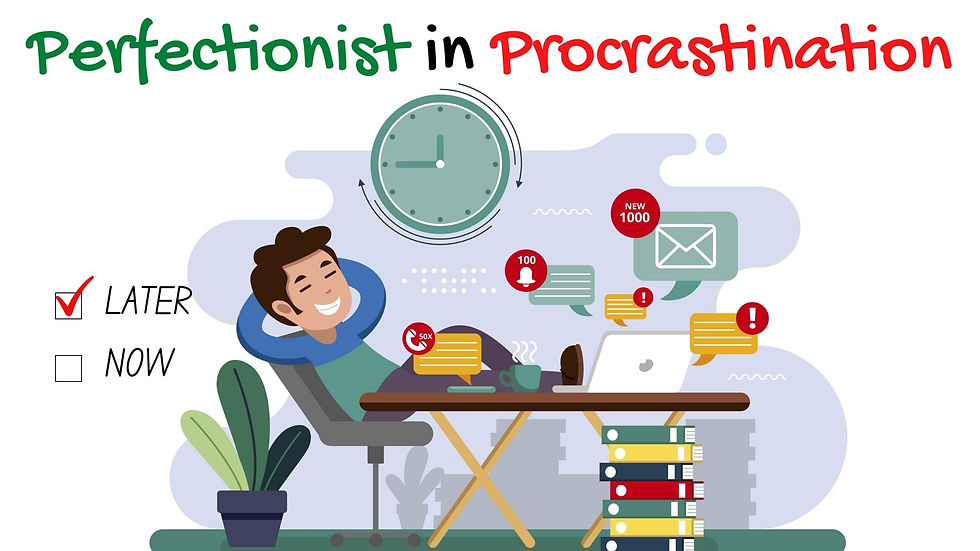
Now of course that everything is very important, the truth being very few things really are. Remember, it is your attention that is a real scarcity in the age of information technology. It is something like with food, you can have all the food you desire to have in your fridge, but this does not mean that you need to eat it all and all at once. So my top tip is to disable all notifications on your devices, use delayed email function to avoid being distracted by emails, and use blocking apps to make sure that you’re accessing certain websites only at a certain time and not being distracted by them at other times. This way, you are in charge of where you’re getting information, as opposed to being dictated by technology. And to give an example, Ratan Tata, who is Ex Chairman of Tata Group and Tata Sons, has been using his smartphone as a gaming device as a source of entertainment. And, believe me, he’s a much busier guy than most of us. Also, do not multitask online. So, do not switch between different tabs or between different devices. An experiment proves that the more we multitask, the worse we become at it, we unlearn our brain to do that. Well, you will still likely get distracted, but you can plan for it. So incorporate five minutes of distraction time every now and then in your work routine, but only after you’re done with a chunk of work and as a reward only. Again, this way, you are taking back control over your time.


2)Space management:

Space management is all about where you want to have connection, and where you want to have silence.


Have you ever thought

⁃ Why the most expensive areas in the city are usually the quietest ones?

⁃ Why is it that, in airport business lounges, there is hardly any sound or music or advertising?

⁃ Why is silence valued so highly?


Well, this is because it’s only in silence that our brain gets an opportunity to process information that we have been feeding into it. We cannot take good conscious decisions or be creative if we are overwhelmed. And we are always overwhelmed when we go online, because our brain is not good at multitasking. So, do not bring the devices into the areas where you process information, where you have rest. This includes your bedroom and your dining table. Your device is just a tool. It is not part of you. As any tool, your devices need their own places.


3) Relationship management:

When I was still working for an advertising agency, we had a client who kept sending us hundreds and hundreds of emails daily to make sure that we’re on the track of delivering the project. In fact, it was his emails that kept us away from doing the work, because all we were doing was just reading and answering them. So, we have built a job timeline that allowed us to show to the client the progress we’re making in real time without any involvement. In a week’s time, the email rate dropped so considerably that we were finally able to get the work done. We still don’t have a digital etiquette as to how people can best contact you, so you can get an equally important message via WhatsApp, Skype, email, you name it. The moral is you need to heavily manage people’s expectations as to how they can contact you. For example, before I meet somebody, I ask them to send me a text message if anything changes. Because I don’t have Internet on my phone. And it works really well. What do you do, however, if you work for a company that expects you to be connected and on top of everything for 24/7?

Well, first things first, stop contributing to this mess by cc’ing everyone.If you want to receive fewer emails, send fewer emails. Second, you might want to mention a few statistics to your colleagues and bosses.


If this doesn’t help, then you can try moving to a different country, like France and Brazil where they have now the so-called rights to disconnect laws, where that, among other things, regulate whether the person has the right not to read work-related emails after the working hours.


4) Self Management:

Self-management is the last cornerstone of changing your digital behaviour, and the most tricky part. Because it does not help, it doesn’t work, if you prohibit yourself from going online. Because your brain still needs the excitement of dopamine.


So, instead, you need to be thinking about where you will take this dopamine from? What will you do with all this free time that all of a sudden you will have available? And this is where I want to share with you my last key learning, and why I think I failed for so long to give up my smartphone. I just did not want to deal with my own problems. When you don’t have anything that distracts you, then you will have to start dealing with the stuff you have been running away from. We often go online not because we need to, but because we have some internal trigger to do that. Maybe we want to feel Important, or maybe we are depressed. In fact, a study says that people who spent a lot of time online tend to be depressed. So, the next time you feel an urge to check your device, ask yourself: What is really triggering me to do that? Is there something I’m trying to avoid feeling or thinking about?


Once you get a life, and a natural source of dopamine, you won’t need anything to distract yourselves from yourselves. Lets pledge to value ourselves, the time we have, people we are surrounded with and the special someone who constantly feels neglected just because of your presence they may choose not to be vocal.


Comments


profile.jpg

Hi, thanks for stopping by!

Hello, thank you for taking the time to visit. I express my observations and experiences in simple, effective, reader-centric solutions. Fill your senses with the fact you ain’t the only one experiencing certain life difficulties, read the juicy bits of trending issues or simply read to get some knowledge.

Let the posts
come to you.

Thanks for submitting!

  • Facebook
  • Instagram
  • Twitter
  • Pinterest

Contact me

Thanks for submitting!

Let me know what's on your mind

© 2020 by Zohaib Khan.

bottom of page